
Most of us who have brushed against stinging nettle (Urtica dioica) remember the sharp, burning sensation it leaves behind. Its sting is notorious—tiny hairs on the plant inject formic acid, histamine, and other compounds into the skin, causing redness, itching, and tingling. For many, that’s reason enough to avoid nettle patches on a walk.
But here’s the twist: throughout history, people didn’t just fear the sting—they used it on purpose. This surprising practice, called urtication, reveals how nettle’s sting has been both a source of pain and a potential source of healing.
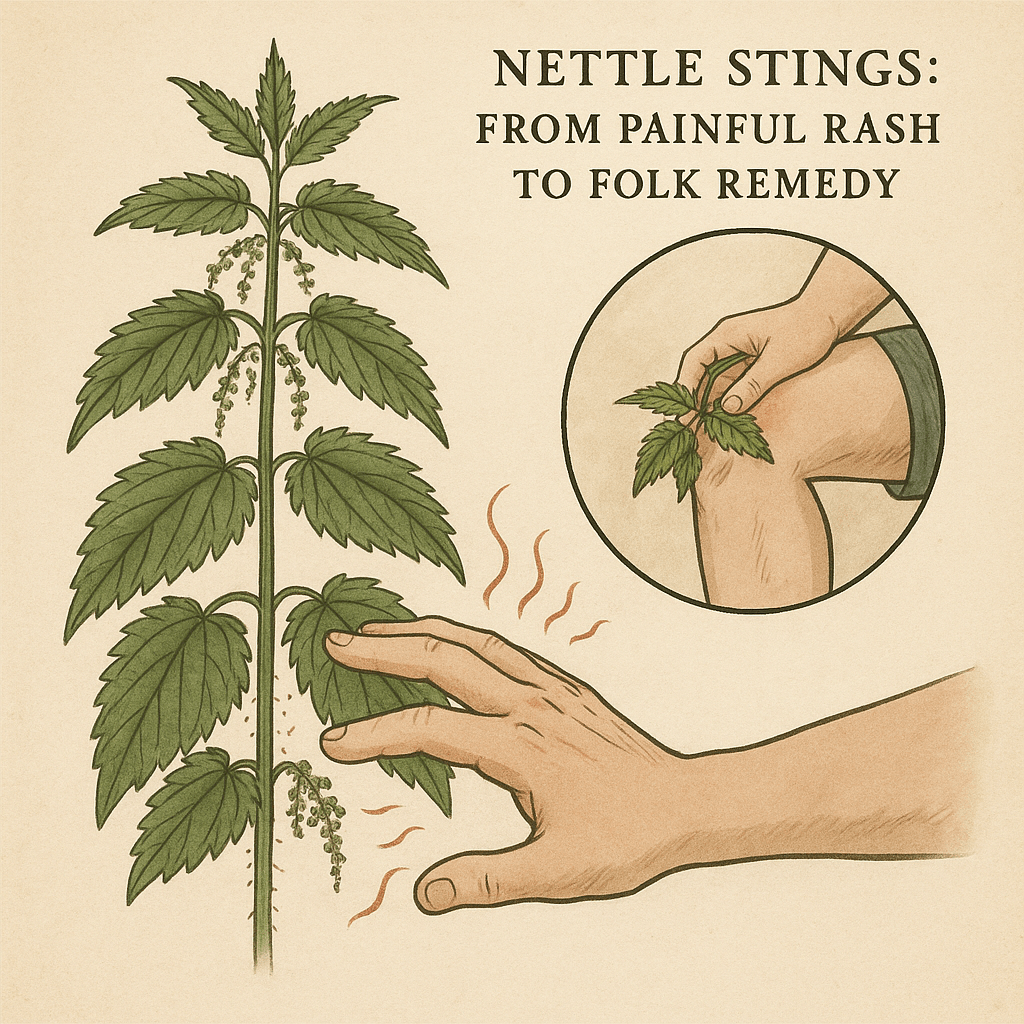
A Painful Tradition
Urtication—the deliberate use of nettle stings for therapeutic purposes—dates back centuries. Ancient Egyptians, Romans, and medieval Europeans all recorded using nettles this way. The practice was especially common for arthritis, rheumatism, and joint stiffness.
The method was simple (if uncomfortable): fresh nettles were lightly whipped or pressed against stiff joints, causing a temporary sting. As odd as it sounds, many people reported relief from deeper, chronic pain afterward.
How Could That Work?
Modern science offers a few possible explanations:
- Circulation Boost – The sting increases blood flow to the area, which may help reduce stiffness and bring warmth to achy joints.
- Inflammatory Response – By creating a short-term irritation, the body releases its own natural anti-inflammatory compounds to calm the area.
- Endorphin Release – Pain signals can trigger endorphins, the body’s natural painkillers, leading to temporary relief.
- Distraction Effect – The sharp, surface-level sting can momentarily “distract” the nervous system from noticing deeper chronic pain.
Modern Uses of Nettle for Pain
While few people today deliberately sting themselves with nettles, the plant hasn’t lost its connection to pain relief. Instead, it’s used in gentler forms:
- Nettle Creams & Ointments – Topical preparations made from nettle extracts may ease joint discomfort.
- Teas & Infusions – Rich in minerals, nettle tea is often used as a nourishing tonic to support overall vitality.
- Capsules or Tinctures – Some people take nettle internally for inflammatory conditions, though results can vary.
Safety First
- Fresh nettle stings usually fade within a few hours, but they can be very uncomfortable in the meantime.
- If you do experience a sting, natural antidotes include dock leaves, plantain, aloe vera, or a cool baking soda paste.
- For those interested in traditional urtication, it’s best approached with caution and guidance. There are many gentler ways to benefit from nettle!
Final Thoughts
Nettle is a plant of contrasts—both sting and salve, warning and wisdom. Its ability to cause pain, yet also relieve it, is a perfect example of the complexity of herbal medicine.
While most of us prefer nettle tea over nettle stings, the story of urtication reminds us how deeply people have experimented with plants in search of relief. It’s a testament to the resilience of both human curiosity and herbal traditions.
So next time you pass a patch of nettles, remember: this prickly green isn’t just a plant to avoid—it’s a powerful ally with a sting that carries an unexpected history of healing.
 AnthosApotheca
Leave a comment