
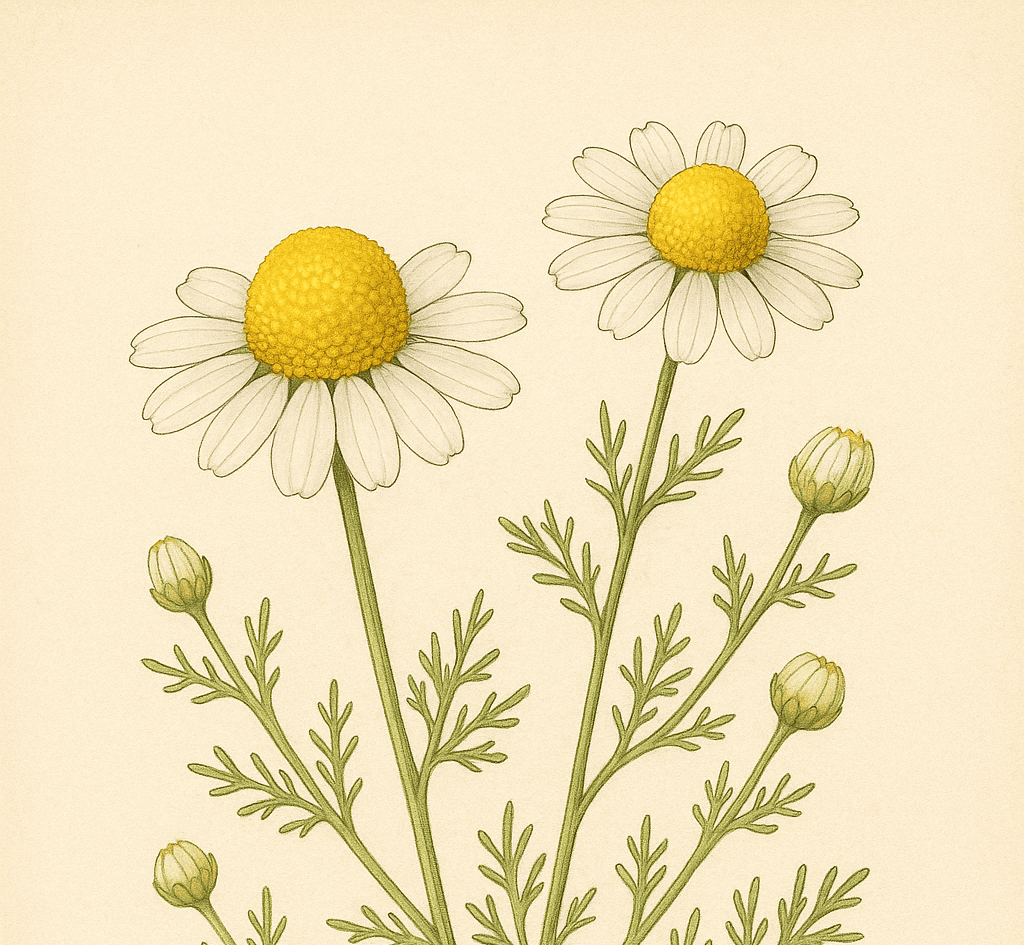

Botanical Profile
- Common Names: Chamomile, German Chamomile, Roman Chamomile, Wild Chamomile, Ground Apple
- Botanical Names:
- Matricaria recutita (German Chamomile) – annual, more commonly used in teas and internal remedies.
- Chamaemelum nobile (Roman Chamomile) – perennial, often used in aromatherapy and external applications.
- Family: Asteraceae (Daisy family)
- Parts Used: Flower heads (fresh or dried)
- Taste/Energetics: Slightly bitter, aromatic, cooling and drying, mildly sweet
Constituents
- Volatile Oils (0.3–1.5%): bisabolol, chamazulene (gives the essential oil a blue color when distilled), bisabolol oxide, farnesene
- Flavonoids: apigenin, luteolin, quercetin
- Coumarins: umbelliferone, herniarin
- Tannins
- Mucilage and polysaccharides
Traditional & Historical Use
- Egyptians revered chamomile as a sacred herb dedicated to Ra, the sun god, for fevers and skincare.
- Greeks and Romans used it for digestive complaints, fevers, and as a strewing herb for fragrance and pest control.
- Medieval Europe: employed in beer brewing, as a relaxant, and to freshen indoor spaces.
- Folk medicine: soothing for children’s ailments such as colic, teething, and restlessness.
Actions (Herbal Properties)
- Nervine relaxant (calms the nervous system, reduces anxiety and stress)
- Mild sedative (supports restful sleep)
- Carminative (eases gas, bloating, digestive upset)
- Anti-inflammatory (internal and external)
- Antispasmodic (relieves muscle and gut cramping)
- Antimicrobial (mild, useful for skin and mucous membranes)
- Vulnerary (heals and soothes skin)
Indications & Uses
Internal
- Digestive Health: bloating, gas, indigestion, colic, nervous stomach, nausea
- Nervous System: anxiety, irritability, insomnia, mild depression, tension headaches
- Women’s Health: menstrual cramps, restlessness in pregnancy (gentle use)
- Immune/Respiratory: supportive during colds, fevers (induces mild sweating), sore throats
External
- Skin: eczema, dermatitis, rashes, minor wounds, sunburn, diaper rash
- Eyes: conjunctivitis, tired/irritated eyes (as a cooled compress, not the essential oil)
- Mouth: mouth ulcers, gum irritation (as a rinse)
- Hair/Scalp: added to rinses for shine and soothing scalp irritation
Preparations & Dosage
- Infusion (Tea): 1–2 teaspoons dried flowers per cup, steep 5–10 minutes. Drink up to 3 times daily.
- Strong Infusion: 2–3 tablespoons dried flowers per pint, steep 20–30 minutes (used for baths, compresses, hair rinses).
- Tincture (1:5, 45% alcohol): As directed on label.
- Essential Oil: Only for external aromatherapy or diluted topical use. Internal use not recommended without professional guidance.
- Bath/Compress: Add ½–1 cup dried flowers (or strong infusion) to bathwater; use cooled tea as a skin or eye compress.
Safety & Contraindications
- General: Chamomile is considered very safe for most people, including children and elderly.
- Allergies: Avoid if allergic to plants in the Asteraceae (daisy/ragweed) family.
- Pregnancy: Generally safe in tea amounts, but concentrated forms (tincture or essential oil) should be used with care. Always check with your doctor.
- Drug Interactions: May enhance the effects of sedatives, anticoagulants (e.g., warfarin), and alcohol.
- Essential Oil: Can be irritating if applied undiluted; not for internal use without clinical supervision.
Energetic/Traditional Systems
- Ayurveda: Cooling, soothing; balances excess Pitta and Vata; calms heat and restlessness.
- Traditional Western Herbalism: Gentle nervine and carminative, considered safe for children and sensitive individuals.
- Doctrine of Signatures: With its sunny yellow center, chamomile was thought to bring lightness and cheer, echoing its role in calming moods.
Research & Modern Evidence
- Anxiety & Sleep: Clinical trials show chamomile extract may reduce symptoms of generalized anxiety disorder and improve sleep quality.
- Anti-inflammatory: Chamazulene and bisabolol are well-studied for reducing inflammation in skin and mucous membranes.
- Digestive Health: Studies support its traditional use for functional dyspepsia, colic, and gastrointestinal discomfort.
- Topical Applications: Chamomile creams have shown efficacy in soothing eczema and dermatitis.
Fun Facts
- The name “chamomile” comes from the Greek khamai-melon, meaning “earth apple,” for its apple-like scent.
- In gardens, chamomile is known as the “plants’ physician,” believed to improve the health of neighboring plants.
- Chamomile has been used to flavor everything from beer to candy, and even as a hair lightener in old folk remedies.
Summary
Chamomile is one of the most beloved herbs in the world for good reason. Gentle yet powerful, it offers support for the nervous system, digestive tract, skin, and more. Safe for children and adults alike, chamomile’s sweet aroma and calming nature make it an ideal herb for both beginners and experienced herbalists. Whether sipped as a nightly tea, used as a soothing compress, or enjoyed in a fragrant bath, chamomile continues to embody the timeless connection between plants and peace.
 AnthosApotheca
Leave a comment