
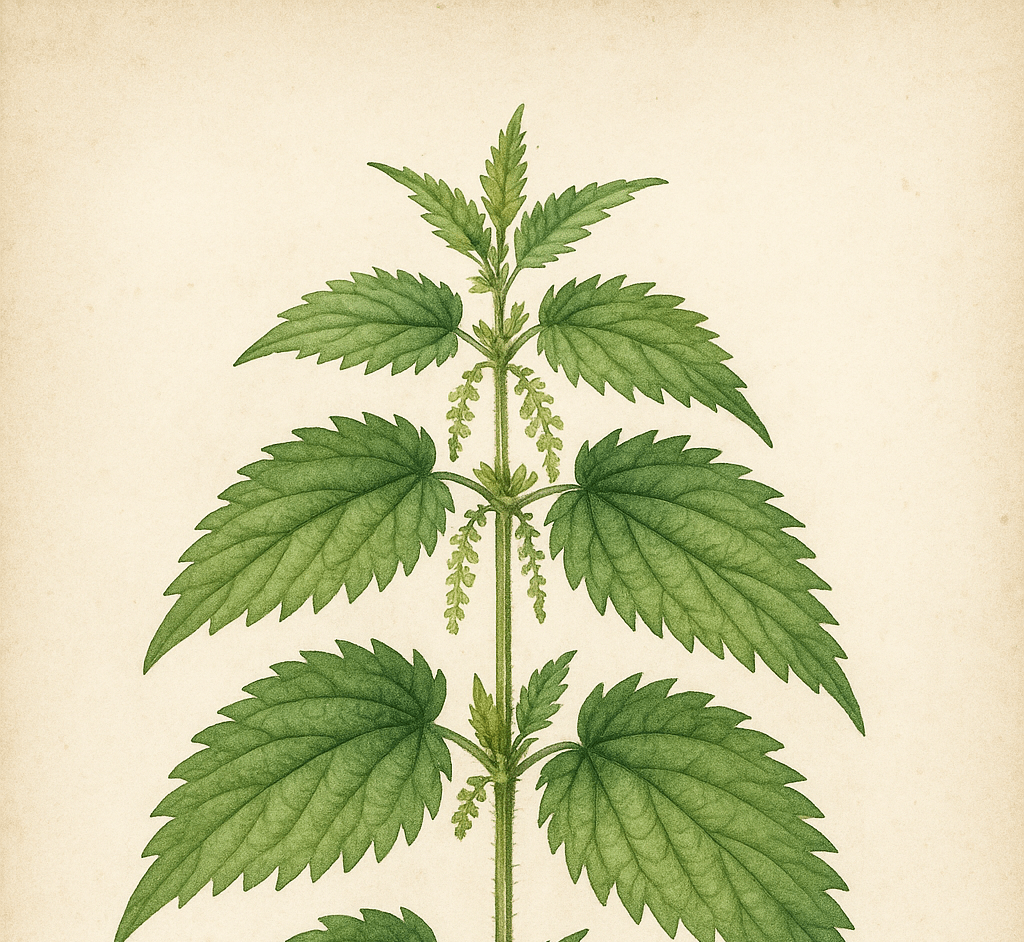
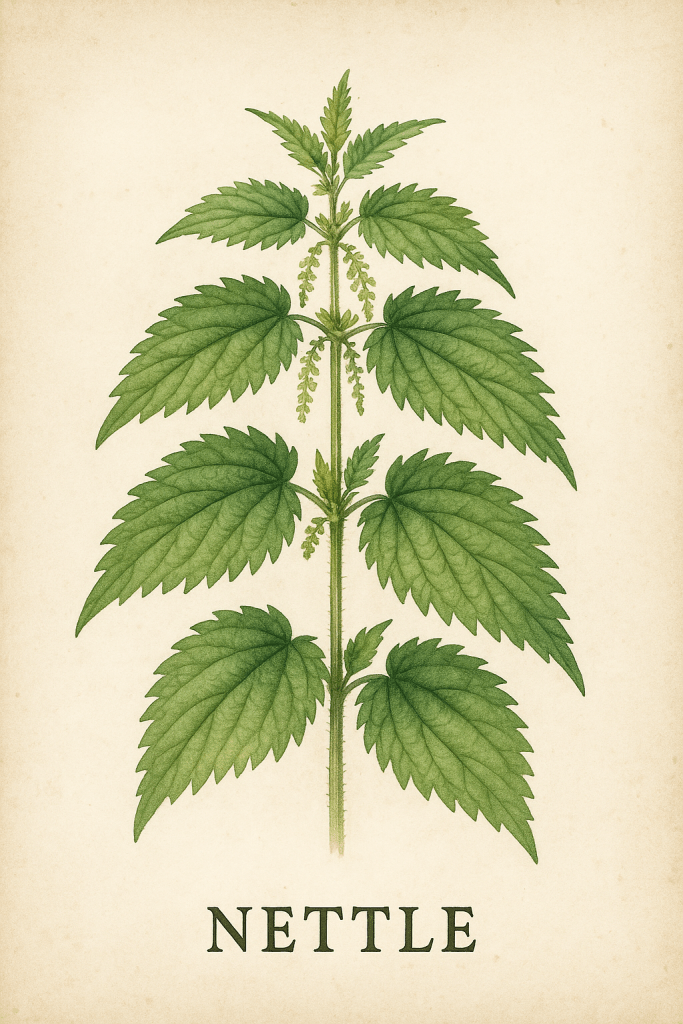
At first glance, nettle (Urtica dioica) doesn’t seem very friendly. Known for its sting, many people have brushed against it on a hike and sworn never to go near it again. But behind that prickly first impression is one of the most nourishing and beneficial herbs you can add to your daily life. Nettle is a powerhouse of minerals, vitamins, and gentle healing support—once you get to know it, you’ll see why herbalists treasure it.
A Little History
Nettle has been part of human life for centuries. Ancient Egyptians used it for arthritis and lower back pain. Roman soldiers reportedly rubbed it on their skin to stay warm in cold climates. In European folk traditions, nettle was considered both food and medicine—cooked into soups, brewed into teas, and even woven into cloth from its fibrous stalks.
Today, nettle continues to be celebrated as a nourishing tonic for the whole body.
Meet the Plant
- Botanical name: Urtica dioica
- Appearance: Tall, serrated green leaves on square stems, often forming dense patches; covered in tiny stinging hairs
- Flavor: Earthy, grassy, slightly nutty when brewed or cooked
- Parts used: Leaves (fresh or dried), root, and seeds (each with different properties)
(For beginners, the leaves are the safest and most common starting point.)
Key Benefits of Nettle
- Nutrient-Rich Nourishment
Nettle is loaded with vitamins A, C, K, and minerals like iron, calcium, magnesium, and potassium. It’s like a green multivitamin in a cup of tea. - Supports Energy & Vitality
Because of its mineral content, nettle tea is often used as a gentle daily tonic to support overall energy, especially for those who feel fatigued or depleted. - Eases Seasonal Allergies
Many people find nettle tea or capsules helpful during springtime sneezing season, as it can gently calm the body’s histamine response. - Skin & Hair Health
Nettle has long been used to support clear skin and strong, shiny hair—thanks to its nutrients and gentle detoxifying qualities. - Supports Joint Comfort
Traditionally, nettle has been used for joint stiffness and mobility, especially in folk remedies for arthritis.
How to Use Nettle
- Tea/Infusion: Steep 1–2 tablespoons of dried nettle leaves in hot water for 10–15 minutes. For a stronger “nourishing infusion,” let it steep for 4–8 hours.
- Food: Fresh young nettle leaves can be cooked like spinach (steaming removes the sting). Delicious in soups, stews, or pesto.
- Hair Rinse: Brew strong nettle tea, let it cool, and use it as a final rinse for hair to support shine and scalp health.
- Capsules/Tincture: Available for convenience if tea isn’t your style.
Warning:
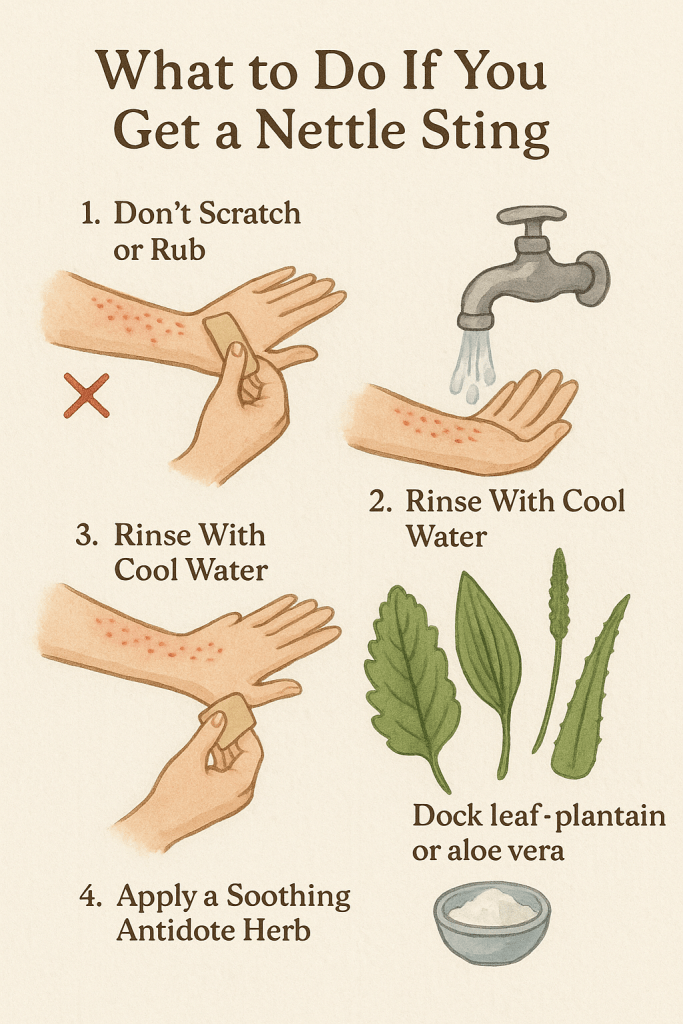
If you happen across nettle when you are out and about- maybe taking a hike or camping, use caution. More than likely, you will feel it before you see it. If you touch nettle, or even if it gently brushes across your skin, you might be startled by the sudden stinging that nettle can deliver. Nettle’s sting comes from tiny hairs on the leaves and stems that inject formic acid, histamine, and other compounds into the skin—causing that familiar burning, tingling rash. Luckily, there are several simple “antidotes” that help soothe the sting quickly:
1. Don’t Scratch or Rub
Scratching can push the stinging hairs deeper into the skin. First step: try to stay hands-off for a moment.
2. Remove the Hairs
- Use tape (like duct tape or medical tape): press it gently onto the rash, then lift off to pull out any remaining stingers.
- A piece of cloth or the sticky side of a bandage can work too.
3. Rinse With Cool Water
Flush the area with cool water to wash away remaining irritants. Avoid hot water, which can increase inflammation.
4. Apply a Soothing Antidote Herb
Traditionally, herbalists recommend using plants that often grow near nettle:
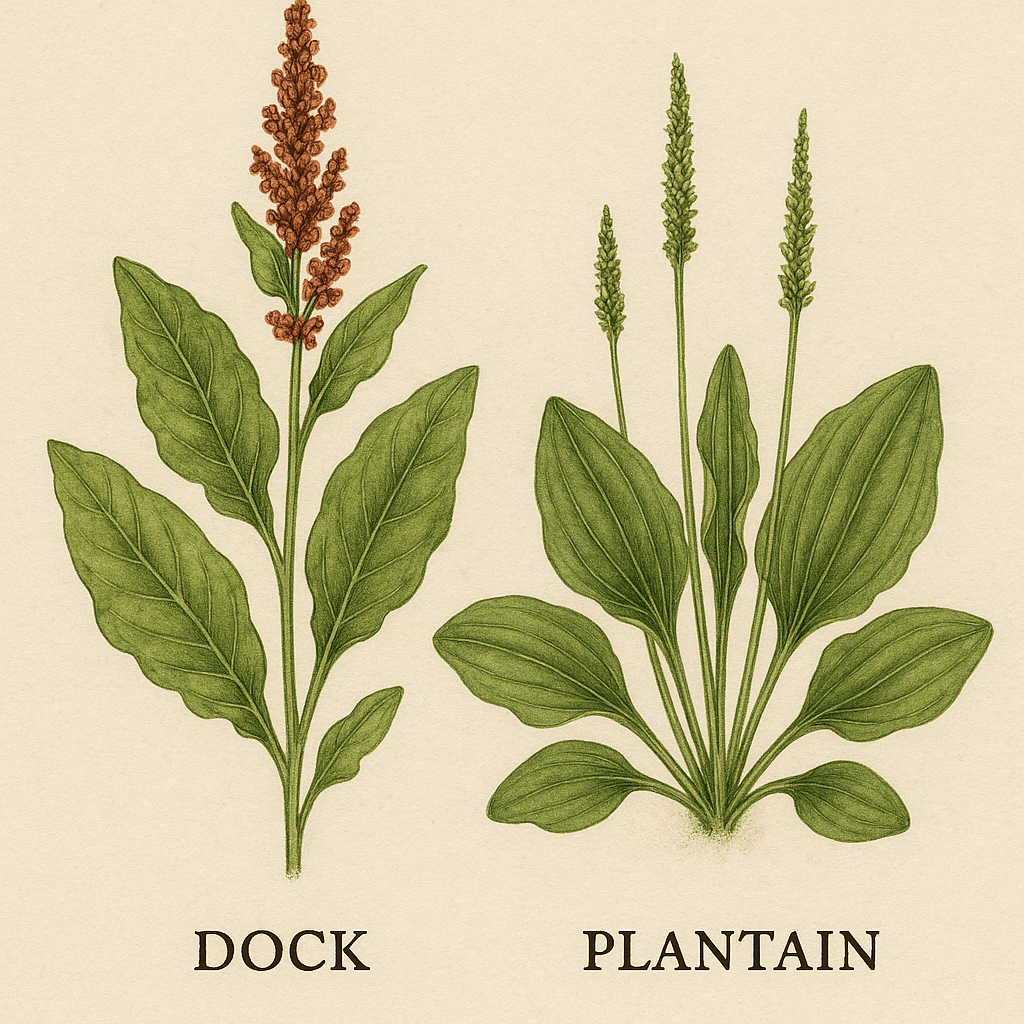
- Dock leaves (Rumex spp.) – rubbing a fresh dock leaf on the sting is a folk remedy that actually works for many people.
- Plantain leaf (Plantago spp.) – crush the fresh leaf into a poultice and apply directly.
If you don’t have those on hand:
- Aloe vera gel – cools and soothes.
- Baking soda paste (mix with a little water) – neutralizes the acidity.
- Cold compress – reduces swelling and irritation.
5. Time
Most nettle rashes resolve within a few hours, even without treatment. Remedies just help speed up comfort.
✨ Quick Herbalist Tip: Nettle loves to grow alongside its antidote—plantain and dock—almost as if nature provides the cure right next to the sting.
Safety Notes
- Cooking or drying nettle removes the sting—so don’t worry about “biting back” once it’s prepared.
- Generally safe for most people, but nettle is a natural diuretic, so avoid very high doses if you’re on medications that affect fluid balance.
- Pregnant individuals should check with a provider before using strong nettle preparations.
Fun Fact
During World War II, nettle was harvested in England for its chlorophyll-rich green dye, which was used to color military uniforms! Its fibers were also used as a linen substitute in earlier centuries.
So where might you run into nettle out in the wild?
Nettle (Urtica dioica) is surprisingly common and grows across much of the world—once you know what to look for, you’ll start noticing it everywhere. 🌿
Regions Where Nettle Grows
- North America: Widely found throughout the U.S. and Canada, especially in moist, temperate areas.
- Europe: Native to and very common across Europe—from roadsides to woodlands.
- Asia: Grows throughout temperate regions, particularly in China, Japan, and India.
- Other areas: Also naturalized in parts of South America, Australia, and New Zealand.
Typical Habitats
Nettle thrives in:
- Moist, nitrogen-rich soils → often near rivers, streams, and ditches.
- Edges of woodlands → where sun and shade mix.
- Disturbed ground → old farms, roadsides, hedgerows, and even backyard corners.
- Near human settlements → nettle loves soil enriched by organic matter (like compost or manure).
When You’ll See It
- Spring to early summer: Young nettle shoots are most tender and harvested for food or tea.
- Summer to early autumn: Plants grow tall (2–6 feet) and flower, losing some tenderness but still useful for drying.
✨ Fun fact: Herbalists often say that if you find nettle, it’s a sign of rich, fertile soil—it’s both a plant ally and a gardener’s clue.
Final Thoughts
Nettle is the perfect example of how an intimidating plant can turn out to be one of the most generous allies. Beneath its sting lies nourishment, energy, and deep support for everyday wellness.
For beginners, nettle tea is one of the best ways to start exploring herbalism—it’s simple, safe, and deeply rewarding. With each sip, you’re giving your body a green infusion of strength that has been valued for centuries.
So next time you see a patch of nettles on a walk, maybe you’ll look at them with new eyes: not as a weed to avoid, but as a powerful friend waiting to be welcomed.
And stay tuned. Nettle is such a powerful herb, we’ve got more to say about it in our next post. 🙂
 AnthosApotheca
Leave a comment