
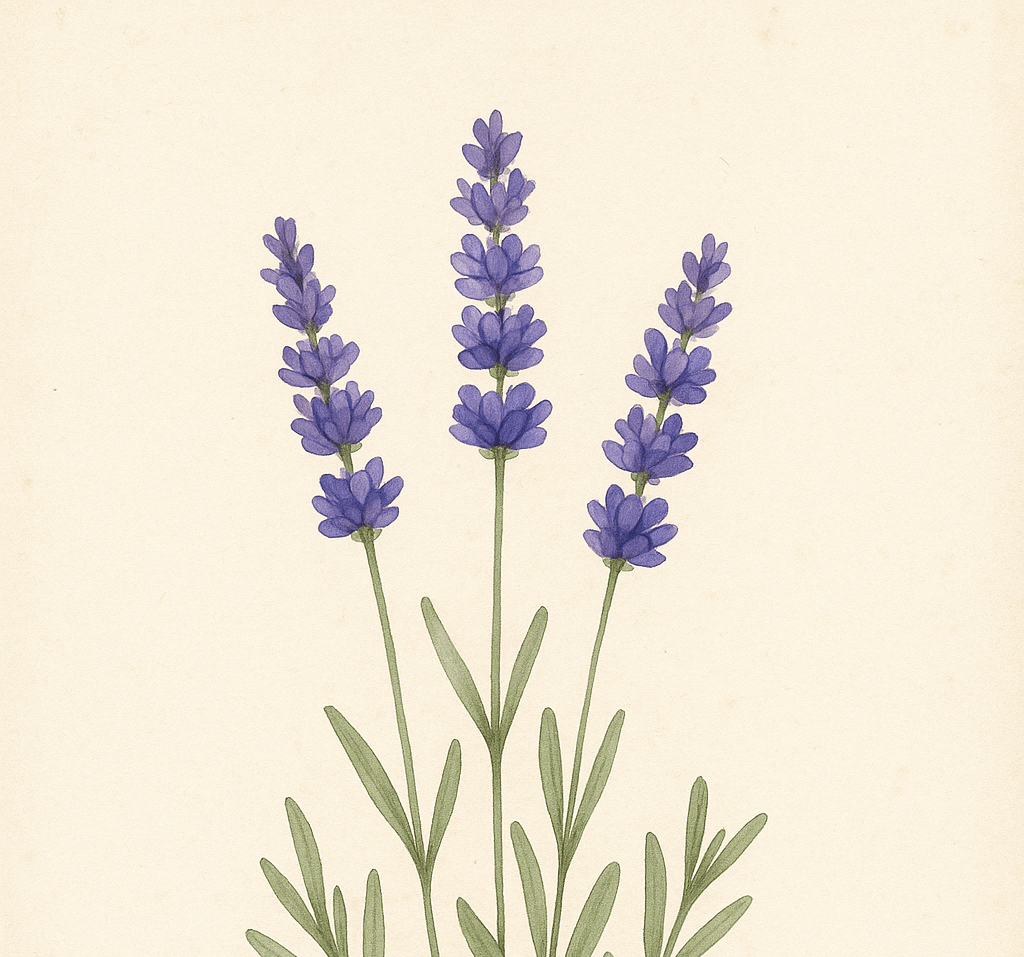
Few herbs are as universally loved as lavender (Lavandula angustifolia). With its soothing fragrance, delicate purple blossoms, and long history of use, lavender has become a symbol of relaxation and comfort. From sleepy sachets tucked under pillows to fragrant teas and oils, lavender is one of the most approachable herbs for beginners.
A Little History
Lavender has been treasured for centuries. The Romans used it to scent their baths and linens (its name comes from lavare, “to wash”). Ancient Egyptians included it in perfumes and embalming. In medieval Europe, lavender was strewn across floors to freshen the air and ward off pests. It has also been used in love potions, as a charm for protection, and as a sign of purity.
Today, lavender remains one of the most widely used herbs in aromatherapy and herbal wellness.
Meet the Plant
- Botanical name: Lavandula angustifolia (also called true lavender or English lavender)
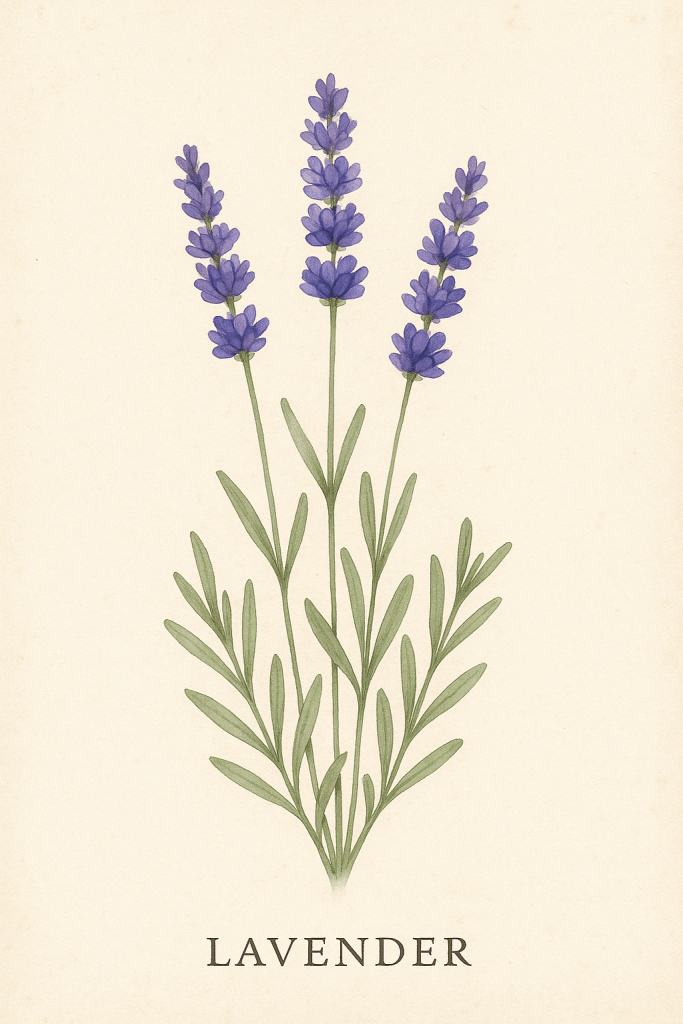
- Appearance: Woody stems with narrow silver-green leaves and clusters of small purple-blue flowers
- Fragrance/Flavor: Floral, slightly sweet, with a touch of earthiness
- Parts used: Flowers (fresh or dried), sometimes leaves
Key Benefits of Lavender
- Supports Relaxation & Sleep
Lavender is perhaps best known for calming the mind and easing stress. Inhaling its aroma or sipping lavender tea can support restful sleep and help reduce anxiety. - Eases Tension & Headaches
Lavender oil (diluted in a carrier oil) can be massaged into temples or the back of the neck to help relieve stress-related headaches. - Skin-Soothing Properties
Lavender’s gentle antimicrobial qualities make it useful for minor cuts, burns, or insect bites. Lavender-infused oil or diluted essential oil can calm irritation. - Mood & Emotional Support
Lavender has been shown to help ease restlessness and uplift mood, making it a favorite in aromatherapy for emotional balance. - Cleansing & Household Uses
Dried lavender blossoms can freshen linens, deter moths, and add fragrance to homemade cleaners.
How to Use Lavender
- Tea: Steep 1 teaspoon of dried lavender flowers in hot water for 5–7 minutes. Use sparingly, as the flavor is strong.
- Aromatherapy: Add a few drops of lavender essential oil to a diffuser or onto a cotton ball to inhale.
- Topical Oil: Dilute lavender essential oil with a carrier oil (like jojoba) for massage or skin care.
- Bath: Add a handful of lavender blossoms or a few drops of essential oil to bathwater for a calming soak.
- Sleep Sachets: Sew dried lavender into small pouches and tuck into pillows or drawers.
Safety Notes
- Lavender is considered very safe for most people.
- Essential oil should always be diluted before applying to the skin, though some sources say that there are a handful of oils that can be applied “neat”- AKA without diluting. Do your research before using any oils undiluted.
- Avoid ingestion of large amounts of lavender essential oil—it is not the same as using the dried herb in teas.
- A small number of people may find lavender mildly stimulating rather than calming—listen to your body.
Fun Fact
Queen Elizabeth I of England was said to be so fond of lavender that she demanded fresh lavender flowers every day, and she used lavender jam to help ease her migraines!
Final Thoughts
Lavender is more than just a pretty purple flower—it’s a gentle, versatile herb that supports body, mind, and spirit. Whether you use it to relax after a long day, ease a headache, or freshen your home, lavender has a way of bringing calm into daily life.
For beginners, it’s one of the easiest herbs to fall in love with: fragrant, safe, and endlessly useful. Lavender reminds us that sometimes the simplest plants carry the most timeless gifts.
 AnthosApotheca
Leave a comment