
We’re taking a quick break from the Top 10 Beginner herbs, to “spice things up”. 😀
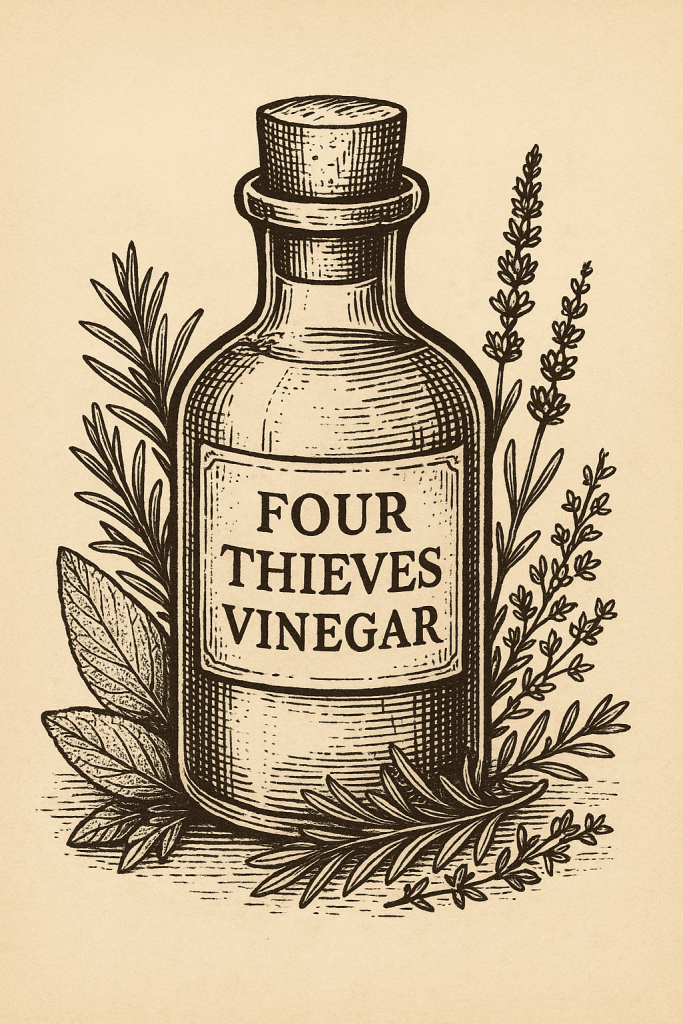
When most people think of herbs, they picture soothing teas or fragrant kitchen spices. But history tells a spicier story—sometimes herbs were at the center of mystery, crime, and even scandal. One of the most notorious tales comes from plague-ridden 17th century France, when a band of thieves shocked the world with their herbal secret.
A City in Fear
In the 1600s, Europe was repeatedly ravaged by outbreaks of the plague. Death spread quickly, and fear gripped entire cities. Houses of the sick were abandoned, and belongings were left untouched—except by one daring group.
In Toulouse, France, thieves were caught raiding the homes and even the bodies of plague victims. The scandal wasn’t just that they were stealing from the dead—it was that they never got sick.
The Thieves’ Secret
When captured, the thieves were interrogated. Everyone wanted to know: how did they avoid certain death?
Their answer was shocking: an herbal vinegar. Before each heist, they would douse themselves in a blend of vinegar steeped with protective herbs—sage, rosemary, thyme, lavender, and others. They rubbed it on their skin, soaked cloths in it, and even inhaled it as they worked.
The recipe became known as “Four Thieves Vinegar.” Instead of being executed, the thieves were offered leniency in exchange for their formula.
Why It Was Scandalous
- Defying Death: At a time when even doctors and priests were powerless against the plague, the idea that simple herbs could protect common criminals was shocking.
- Accusations of Sorcery: Herbal medicine already walked a fine line between healing and “witchcraft.” The thieves were accused of using magic or dark arts.
- A Threat to Authority: If herbs could succeed where the church and medicine had failed, who really held the power?
This combination of herbal knowledge and defiance of death turned a simple vinegar recipe into one of history’s most infamous herbal scandals.
The Modern Legacy
Four Thieves Vinegar has lived on in folklore, herbal medicine, and even magical traditions. Today, it’s sometimes used as a natural cleaning solution or a tonic for immune support. While we now know vinegar and herbs can’t stop the plague, the blend does have antimicrobial properties and a sharp, cleansing aroma.
A Simple Four Thieves Vinegar Recipe
Here’s a modern version you can make at home. (Note: this is a folk recipe for fun and education—not a medical treatment!)
Ingredients
- 2 cups apple cider vinegar (raw, if possible)
- 1 tablespoon dried sage
- 1 tablespoon dried rosemary
- 1 tablespoon dried thyme
- 1 tablespoon dried lavender
- 4 cloves garlic, crushed
- Optional: a pinch of black pepper, cinnamon stick, or lemon peel for extra flavor
Instructions
- Place all herbs and garlic into a clean glass jar.
- Pour vinegar over herbs until completely covered.
- Seal with a non-metal lid (vinegar can corrode metal) and store in a cool, dark place.
- Shake daily for 2–4 weeks.
- Strain out the herbs and rebottle the liquid.
How to Use
- As a natural household cleaner: dilute with water and wipe surfaces.
- As a vinegar infusion: use small amounts in salad dressings or marinades for a flavorful, tangy kick.
- As a folk ritual: spritz around your home for a zesty herbal experience.
Final Thoughts
The tale of Four Thieves Vinegar reminds us that herbs have always been more than just flavorings or simple remedies. They carried power, sparked fear, and sometimes caused scandal. Whether you make this vinegar as a fun DIY project, a nod to history, or a fragrant kitchen staple, you’re continuing a story that’s been told for centuries.
So next time you shake some rosemary or thyme into your dinner, remember—you’re holding the same plants that once made thieves into legends.
 AnthosApotheca
Leave a comment