
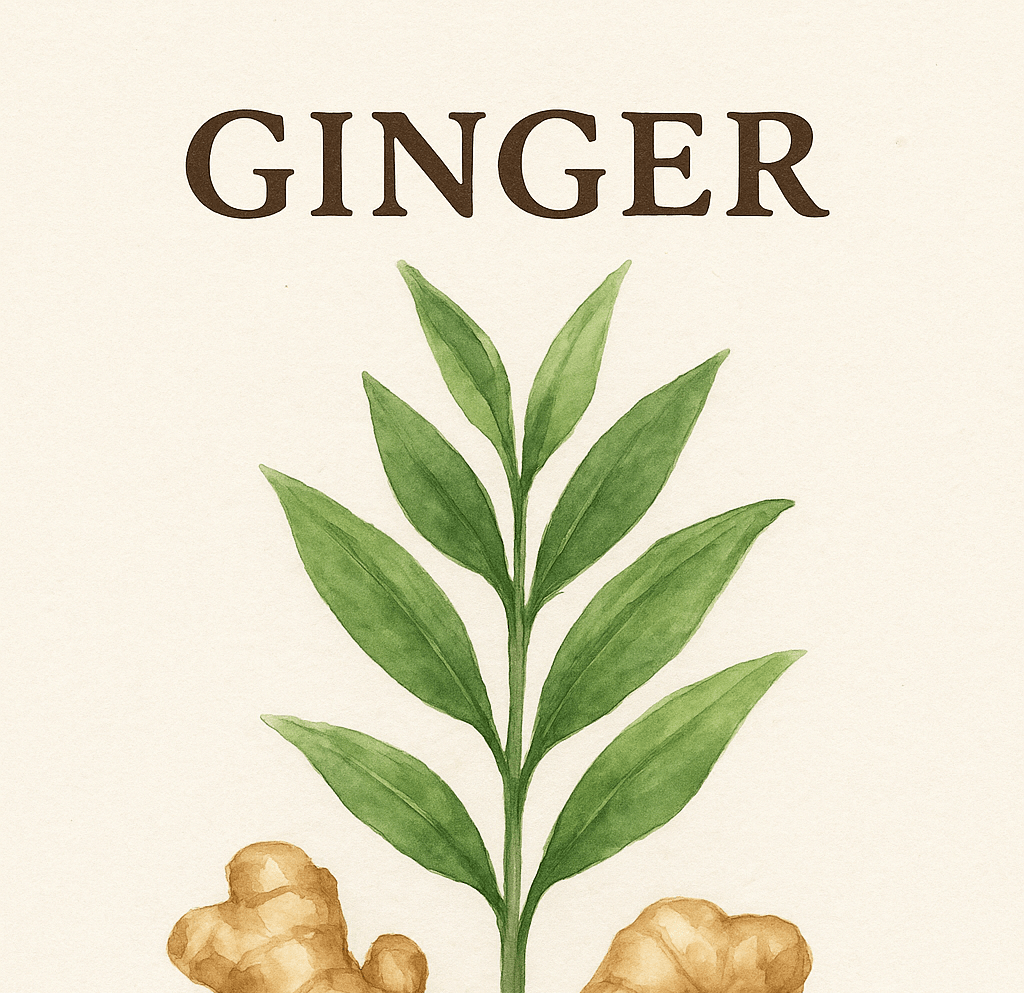
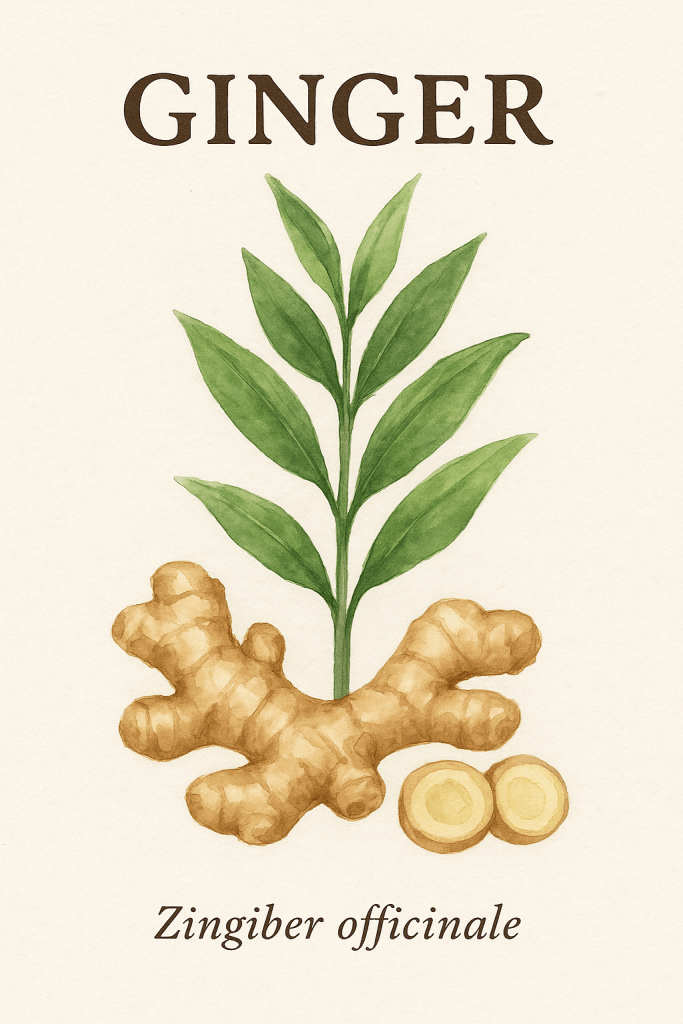
If peppermint is cool and refreshing, ginger is its fiery counterpart—warm, stimulating, and full of energy. Beloved across cultures as both a spice and a remedy, ginger (Zingiber officinale) has been treasured for centuries for its ability to support digestion, circulation, and resilience. This humble root is one of the most versatile herbs you can invite into your daily life.
A Little History
Ginger has traveled the world for thousands of years. Originating in Southeast Asia, it quickly became one of the most traded spices in history. Ancient Chinese and Ayurvedic texts praised ginger for its warming, digestive, and energizing qualities. The Greeks used it wrapped in bread (the earliest form of “gingerbread”), and it was so highly valued in medieval Europe that a pound of ginger was worth the same as a live sheep!
Today, ginger remains a kitchen and apothecary staple worldwide.
Meet the Plant
- Botanical name: Zingiber officinale
- Appearance: Knobby, tan rhizome (underground stem) with golden flesh inside; leafy shoots above ground
- Flavor: Spicy, pungent, warming, slightly sweet
- Parts used: The rhizome (the “root” we know and love)
Key Benefits of Ginger
- Supports Digestion
Ginger stimulates digestive juices, helping ease bloating, gas, and sluggish digestion. It’s also a classic remedy for motion sickness and nausea, including morning sickness. - Eases Nausea
Chewing fresh ginger, sipping ginger tea, or even sucking on ginger candies can help calm the stomach. This makes it a popular travel companion for seasickness or long car rides. - Warming Circulation
Ginger gets the blood moving and warms the body from the inside out. It’s often used for cold hands and feet or to help the body “sweat out” the start of a cold. - Immune Support
With its warming, antimicrobial qualities, ginger tea with honey and lemon is a time-tested comfort for colds, sore throats, and winter wellness. - Joint & Muscle Comfort
Ginger’s anti-inflammatory properties make it a friend to sore joints and muscles, whether taken internally or used in topical preparations.
How to Use Ginger
- Tea/Infusion: Slice a few thin pieces of fresh ginger and simmer in water for 10–15 minutes. Add honey and lemon for a classic soothing drink.
- Powder: Use ½ teaspoon of dried ginger powder in smoothies, oatmeal, or baking for warmth and spice.
- Food: Add fresh ginger to stir-fries, soups, curries, or juices.
- Compress: A warm cloth soaked in ginger tea can be applied to sore muscles or stiff joints, but pay attention to how the skin responds and adjust application accordingly.
- Candied Ginger: A tasty treat that also helps settle nausea (in moderation!).
Safety Notes
- Ginger is very safe in culinary amounts, but in high doses it may cause heartburn or stomach upset in some people. It can have a laxative effect for some users as well.
- Those on blood-thinning medications should use caution, as ginger may increase bleeding risk.
- Pregnant individuals often use ginger for nausea, but it’s best to consult a healthcare provider about appropriate amounts.
Fun Fact
In ancient China, ginger was considered so valuable that it was often preserved in jars and given as a gift. Confucius himself was said to eat ginger with every meal!
Final Thoughts
Ginger is a perfect example of how herbs can be both everyday food and powerful medicine. It’s warming, uplifting, and wonderfully versatile—whether you’re sipping tea for a sore throat, adding zing to a curry, or calming your stomach on a long journey.
Inviting ginger into your routine is simple, delicious, and deeply rewarding. This fiery little root has stood the test of time, and it continues to remind us that wellness often begins with what we put in our cup and on our plate.
 AnthosApotheca
Leave a comment