
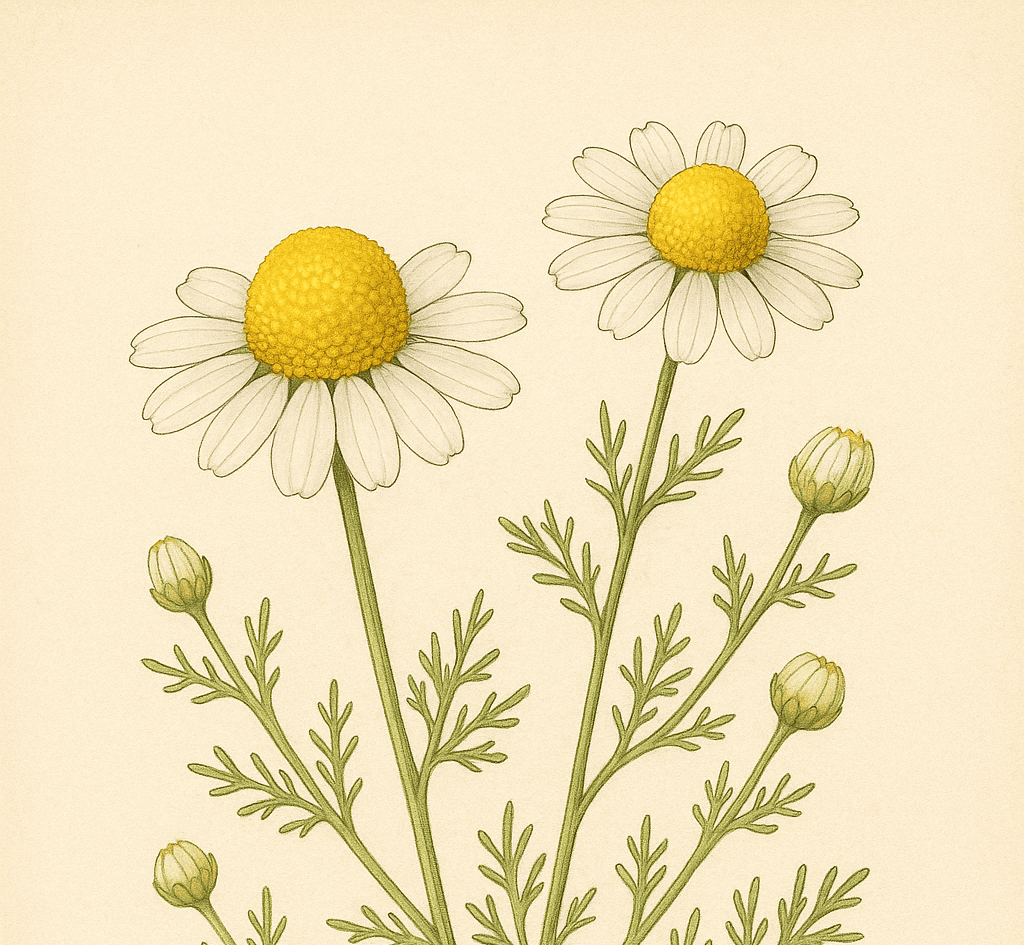

Let’s talk a little about the “beginner” herbs. There are the common, everyday herbs that you might already have in your cupboard or tea cabinet. There are 10 Beginner Herbs that we will look at in this series. The first one is a favorite of many; the lovely, lowly chamomile.
If herbalism had a welcoming committee, chamomile would be standing right at the door with a cup of tea in hand. Beloved for its gentle nature and wide availability, chamomile is often the first herb people try when they’re curious about plant medicine. But don’t let its mild reputation fool you—chamomile has a rich history, powerful properties, and countless uses.
A Little History
Chamomile has been treasured for thousands of years. Ancient Egyptians dedicated it to the sun god Ra and used it for fevers. The Greeks and Romans valued it for digestion and skin health. In European folk traditions, chamomile was known as the “plant’s physician” because it was believed to improve the health of nearby plants in the garden. Today, it remains one of the most widely used herbs worldwide, especially as a calming tea.
Meet the Plant
- Botanical name: Matricaria recutita (German chamomile) and Chamaemelum nobile (Roman chamomile).
- Appearance: Small, daisy-like flowers with white petals and sunny yellow centers.
- Flavor: Light, floral, slightly sweet with a hint of apple (its name comes from the Greek khamai-melon meaning “earth apple”).
German chamomile is more commonly used in teas and tinctures, while Roman chamomile is often found in essential oils and aromatherapy.
Key Benefits of Chamomile
Chamomile shines in many areas of wellness:
- Calming the Nervous System
Chamomile is famous for helping with relaxation, easing anxiety, and supporting restful sleep. A warm cup of chamomile tea before bed is a simple ritual that signals the body it’s time to wind down. - Soothing Digestion
Traditionally used for bloating, gas, and mild indigestion, chamomile relaxes the smooth muscles of the gut. It’s especially helpful for stomach upset tied to stress. - Supporting Skin Health
Chamomile’s anti-inflammatory and soothing properties make it a gentle choice for irritated skin. A cooled chamomile tea compress can calm sunburn, rashes, or tired eyes. - Gentle Immune Support
Some studies suggest chamomile may help support immune health, making it a comforting tea during colds or seasonal sniffles. - For Children
Because of its gentleness, chamomile has long been used (in diluted tea form) to soothe teething, fussiness, or tummy upset in little ones.
How to Use Chamomile
Chamomile is wonderfully versatile. Here are a few simple ways to try it:
- Tea: Steep 1–2 teaspoons of dried chamomile flowers in hot water for 10 minutes. Sweeten with honey if desired.
- Bath: Add a handful of chamomile flowers (or a few tea bags) to bathwater for a calming soak.
- Compress: Soak a washcloth in cooled chamomile tea and place over irritated skin or tired eyes.
- Hair Rinse: Chamomile tea can bring a natural shine to hair and is especially loved by blondes for adding brightness.
- Oil Infusion: Infuse dried chamomile in a carrier oil (like jojoba or almond) and use it in homemade balms or massage oils.
Safety Notes
Chamomile is considered very safe for most people, but there are a few things to keep in mind:
- Those allergic to plants in the daisy family (like ragweed) should use caution.
- It may interact with blood-thinning medications, so check with a healthcare provider if you take those.
- Always make sure chamomile is properly dried and sourced from a trusted supplier for internal use.
A Cup of Connection
Chamomile reminds us that herbalism doesn’t have to be complicated. It’s a simple flower with big gifts: calming frazzled nerves, soothing upset tummies, and gently reminding us to slow down. Brewing a cup of chamomile tea isn’t just about its chemistry—it’s also about ritual. Taking the time to steep, sip, and breathe is part of its healing magic.
Whether you enjoy it as a tea before bed, a relaxing bath soak, or a soothing skin compress, chamomile is a beautiful example of how herbs can support body, mind, and spirit in small, meaningful ways.
Next in line for our Beginner Herbs series: Peppermint! Stay tuned!
 AnthosApotheca
Leave a comment